
26 years restoring gunstocks
Last updated: September 18, 2026
A Lifelong Hunter Ranks 4 Ways Men Are Bringing Back Old Gunstocks. Only One Doesn't End in a Refinish.
Here's what actually happens to the wood with each one...
 See Ray's #1 Pick →
You've already been down this road.
I can tell, because if you're reading this you're past the point of asking what to do with the rifle. You've already had the conversation. Maybe it came out of your father's closet with a sticky wrist and a sling stiff as a board. Maybe it's the deer gun you've carried for twenty seasons and the forend has gone grey where your hand sits. Maybe somebody at camp already told you to strip it and Tru-Oil it, and somebody else told you that if you touch it, the history is gone.
You've tried linseed. It's still tacky. You've looked at Tru-Oil and pictured that plastic shine on a sixty-year-old Marlin. You've read the threads. You know the words: preserve, restore, cartouche, "it lost half its value the day he sanded it." You know time is the enemy, because the wood dries a little more every winter, and you know "just send it to a guy" isn't an answer when the quote is more than the gun.
What you don't know yet is which of the four things men are using on old stocks right now is actually worth your next Saturday.
I've spent 26 years finding out. Ranking them on what they do to the original finish, how they handle rain, how long they take to dry, how they look on an old gun, and what the man who used them says a season later. One of them brings a grey stock back in a way the other three never will, and it's not the one anybody at camp reaches for first.
Then Something Unexpected Happened.
One jar didn't fit the pattern. Not because of exotic ingredients, and not because of the claims on the label, but because it was the only thing on my bench that wasn't trying to be a finish.
It sent me back to how stocks were cared for before hard finishes existed. Cabinetmakers and armorers didn't coat wood. They cleaned it, fed it, and sealed it thin, with oil and a rag and a little wax. That was the whole method, and it kept walnut alive for a hundred years.
Wood breathes. Every warm season the oil that was in it when it left the factory moves a little further toward the surface and out. A foam case pulls it faster. A truck cab pulls it faster still. What's left is the finish sitting on top of dry wood, and dry wood looks grey no matter what you coat it with.

Which brings me to the uncomfortable truth about every bottle in the garage. Boiled linseed feeds the wood but never fully dries and barely seals against water. Tru-Oil dries hard and seals, but sits on top like a coat of varnish, and now you own a refinished gun whether you meant to or not. Tung and Danish oils split the difference at the cost of twenty-five coats and a month of your life. They're all solving half the problem:
The right answer must:
- Put oil back under the existing finish, without stripping, sanding, or staining what is there
- Seal thin, so rain beads and hand oil wipes off, without a hard glossy coat that reads as a refinish
- Buff dry in one sitting, so the gun goes back in the safe the same evening and not a month later
- Leave the dents, the checkering, and the cartouches exactly as they are
- Do the sling and the scabbard too, without darkening them or rotting the stitching
Three of the four can't do the first one.
They add a finish over dry wood and hope for the best, while the wood underneath keeps drying. That's exactly why the stock is still grey.
So What Made That One Jar Different?
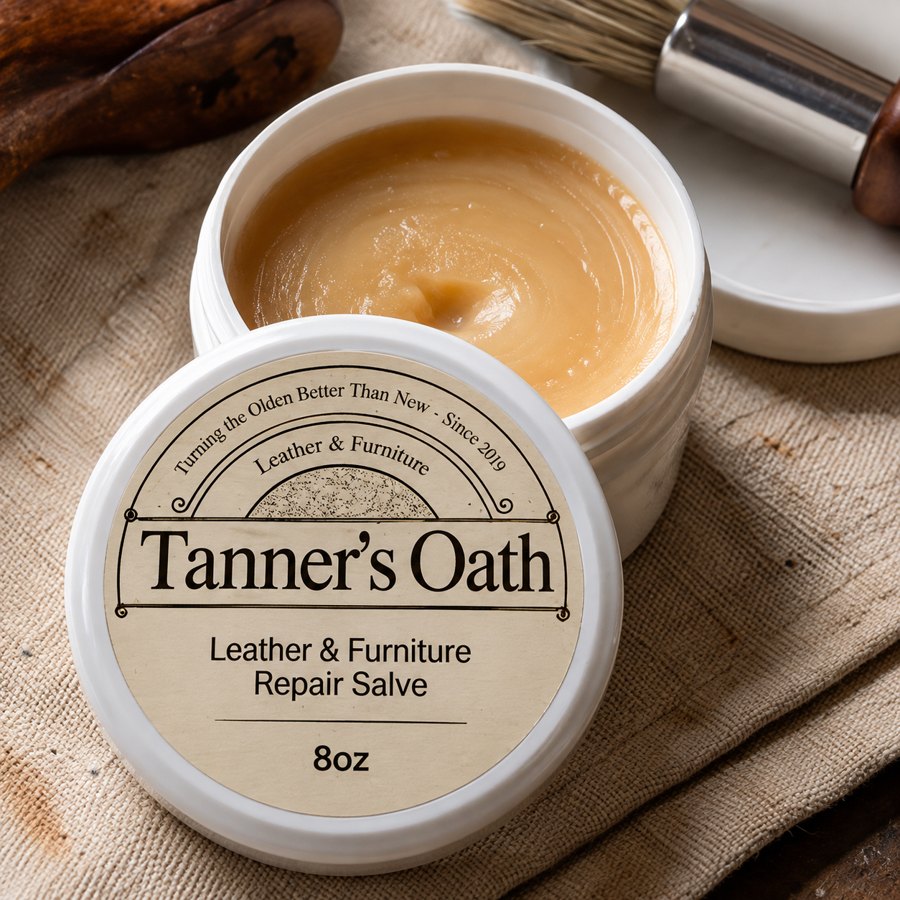
1. Tanner's Oath Wood & Leather Salve
"Tried linseed oil, still tacky two months later. With this, the grey was gone that night, and it didn't go dark on me."
 Mark Dick, Michigan
His late father's Ithaca 37
What works:
- Goes through the existing finish and feeds the wood underneath. Grey goes, grain comes back, nothing gets stripped
- Beeswax and carnauba set a thin layer that buffs dry in ten minutes and helps rain bead
- Goes on clear. Buffs back to the wood's own color, no orange cast, no dye
- Same jar does the sling, scabbard, or saddle without darkening it. No petroleum, so no rotted stitching. A holster gets a thin coat only, so it keeps its shape
- No scent. Nothing to carry downwind
Trade-off:
- Costs more than a quart of linseed (though backed by a 30-day money-back guarantee)
- It's a conditioner, not a filler. Cracks, gouges, and rust still need a gunsmith
- One jar does the safe, so it sells out around opening day
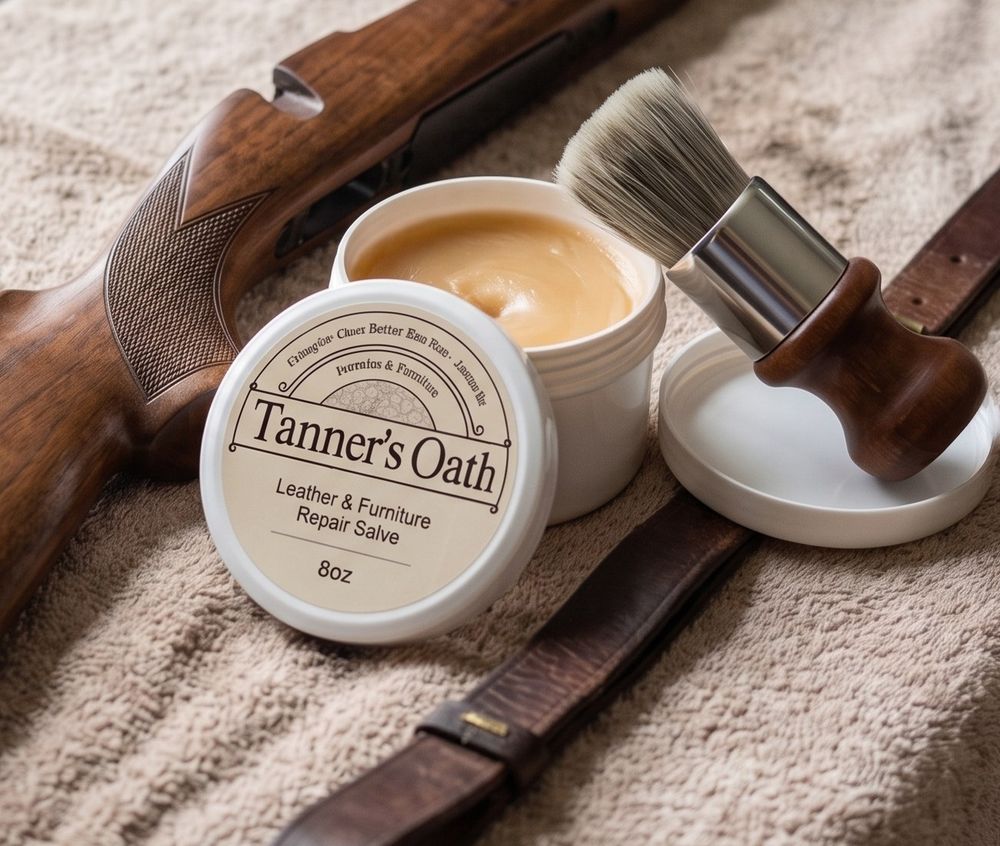
Tanner's Oath and the "Feed the Wood" Method I Couldn't Argue With
When I first got the jar I nearly set it aside. After 26 years I've seen every "miracle" stock product come and go, and most of them are furniture polish with a camo label.
But nobody was pitching me a new finish. They asked me to do two things: read the ingredient list, which is six items long, and put it on a grey stock next to a stock I'd done in linseed. That alone was unusual. What I saw surprised me.
The Problem With Every Other Stock Product, and Why It Isn't Enough
Here's something most men don't know, and the bottles in the garage won't tell you.
Linseed, Tru-Oil, tung, Danish, poly: they all treat the same side of the problem. They add a finish. That's useful if the wood underneath is healthy. It's almost pointless if the wood has dried out, which is the default state of any stock that's spent twenty years in a closet, a foam case, or the back of a truck.

You're painting over wood that's still thirsty.
Tanner's Oath is the only thing on my bench that feeds first and seals second, and it does both from the same jar, thin enough that the original finish is still the original finish when you're done.
The 6-Ingredient System That Changes Everything

What separates this jar from everything else I've reviewed is what isn't in it. No petroleum distillates, no silicone, no turpentine, no dryers, no dye, no scent. Here's what is.
Jojoba oil
A liquid wax closer to the oil in your own skin than anything in a paint aisle. Small enough to go through an old finish and into dry wood, and it doesn't go rancid in the jar.
Shea butter
The emollient. Puts the bend back into a stiff carry sling without the grease that makes mink oil darken leather. And a sling that isn't bone dry stops pulling damp onto the barrel and buttplate it rests against.
Hemp seed oil
The feeding oil. Cabinetmakers used hemp and linseed before petroleum took over; this is the one that doesn't stay tacky.
Beeswax
The thin seal. Sits in the grain, not on top of it, and helps water bead.
Carnauba wax
The hard one. It's why the surface buffs dry and doesn't become a dust magnet the way soft-wax products do.
Vitamin E
Keeps the oils from oxidizing in the jar, so the last fingertip works like the first.
The result: the grey goes, the grain comes back its own color, the surface buffs dry, and the finish you started with is still there underneath.
This isn't a stack of oils. It's a method in a jar.
What Men Reported, and When
I asked the first men who used it to tell me what they saw and when they saw it, because a stock product either works in the first evening or it doesn't.
The standout finding: the first thing they brought up was how fast the grey went. The same evening, after one thin coat and a buff, and it stayed gone (wrist and forend first, where a hand wears the wood driest), with the color coming back the wood's own shade instead of orange, and the sling following overnight, off the rifle.
 AS FOUND
 ONE EVENING
The first evening, they told me, the grey was gone off the wrist and the forend after one thin coat and a buff. And the color that came back was the wood's own, not that orange you get from some oils.
By the next morning the stock was dry to the touch. Nothing came off on their hands, and nothing stuck to the foam in the case.
Overnight, off the rifle, the slings came back too. By morning, a sling that had been stiff as a board would bend again, and it hadn't gone dark.
And by the end of the season they were telling me rain beaded up on the stock, fingerprints wiped right off, and a second coat before the gun went back in the safe took about ten minutes.
That sequence isn't a polish shining for a day. It's what happens when dry wood gets fed and sealed instead of coated.
Meeting The Real Users
Still, I wanted to hear from the men themselves.


These aren't outliers. They're what happens when you fix the dry-wood side of the problem instead of coating over it.
Buy Tanner's Oath →The 30-Day Guarantee That Tells You Everything
Here's what ultimately moved me off the fence.
Tanner's Oath backs the jar with a 30-day money-back guarantee. No asterisk. If the stock or the sling doesn't come back, you get your money back. Nobody offers that on a quart of linseed.
Why does that matter? Because a stock product shows you what it is in the first evening, and a sling shows you overnight. Thirty days is ten times longer than it takes to know. A company that offers it on something you can judge in an hour has watched a lot of stocks come back.
A guarantee like that tells me a company has seen its own results, and is willing to stake its refund policy on what the wood looks like, not on how the label reads.
My Assessment

After 26 years, and after putting all four of these on grey walnut side by side, my conclusion is straightforward.
Linseed and Tru-Oil aren't wrong. They're incomplete. Linseed is feeding without sealing. Tru-Oil is sealing without feeding. Tung and Danish oils are both, at the cost of a month and a finishing project you didn't sign up for. If the only lever you pull is a finish while the wood underneath is dry, you will keep looking at the same grey forend no matter how careful you are.
Tanner's Oath sits in a different category. It's the only thing I've reviewed that feeds the wood first, seals it thin second, does the leather third, and leaves the original finish alone the whole way through. In one jar, in one evening.
After everything I've shown you, the comparison, the ingredients, and the men who used it, the question isn't really whether it works on your stock. The question is whether you want the rifle back in the field this season, or in the safe for another one.
Try Tanner's Oath Risk-Free For 30 Days →30-Day Money-Back Guarantee • Free Shipping From USA • No Petroleum, No Silicone, No Scent
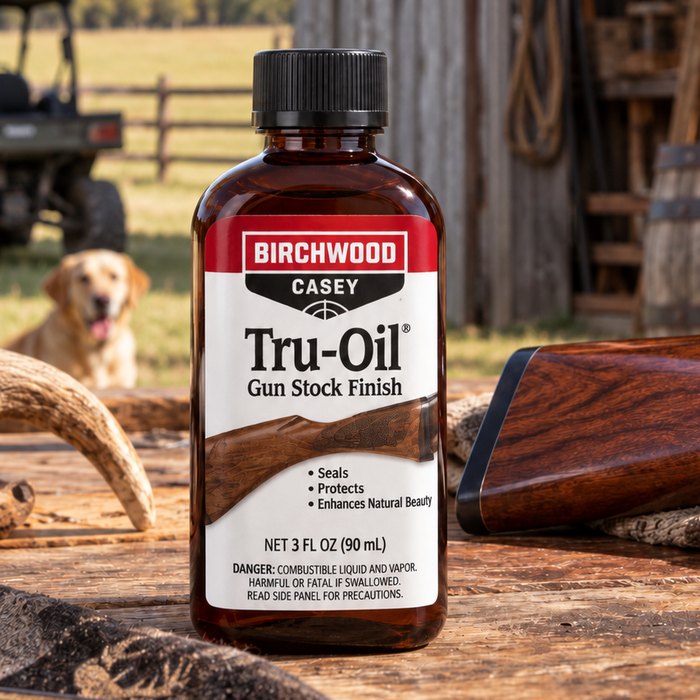
2. Birchwood Casey Tru-Oil
What works:
- Dries fast and hard. A real finish, and a durable one
- Sheds water better than any oil on this list
- Cheap, and on the shelf at every gun counter in America
Trade-off:
- It's a refinish. Once it's on, it's on. You can't wipe it back off, and now the gun isn't original
- Goes glossy and looks like plastic on an old gun. Every man I talked to said some version of that
- Old bottles gum up, and it fills checkering if you're not careful
- Wears on the wrist and comb in a season of hard use, and touching up means stripping
The verdict: if you've decided to refinish, Tru-Oil is a fine way to do it. If you haven't decided, don't let a bottle decide for you. And it does nothing for the dry wood underneath, which is why it goes grey again under the coat.
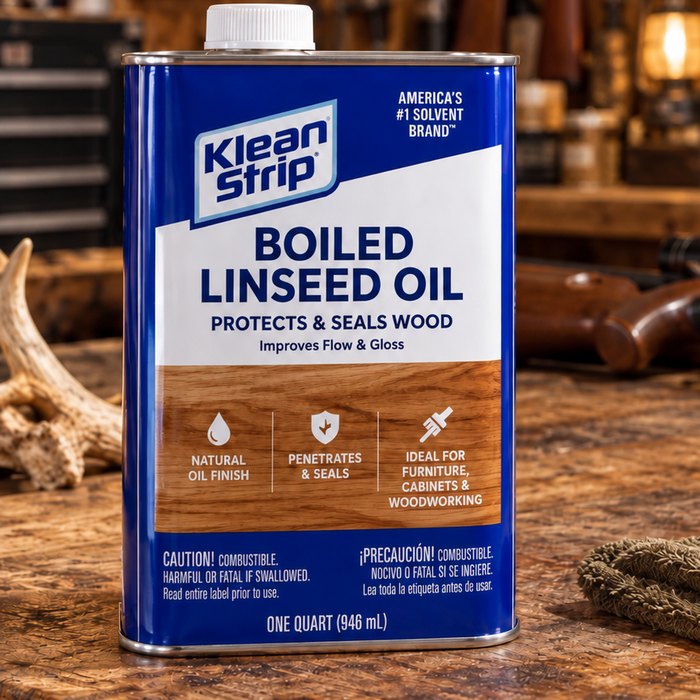
3. Boiled Linseed Oil
What works:
- Feels right on the hand. You can feel the wood, and that matters to a lot of men
- The traditional choice, and five dollars a quart
- Won't strip or stain what's there if you keep it thin
Trade-off:
- Never fully dries. Weeks, months, "never" depending on who you ask. Tacky in the case, tacky on your hand
- Barely seals against water. On the Forest Products Lab moisture scale it hardly registers
- Pools in checkering and softens the points
- Needs many coats, and the stock still goes grey again because linseed feeds but doesn't hold
The verdict: linseed is the right instinct with the wrong tool. It knows the wood is thirsty. It just doesn't know how to stop.
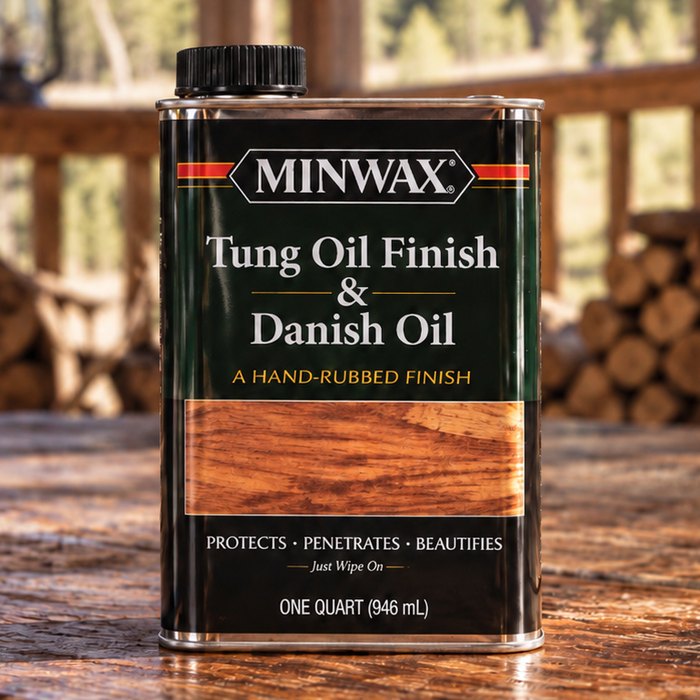
4. Tung Oil and Danish Oil
What works:
- Harder than linseed and less gloss than Tru-Oil. On fresh walnut it's beautiful
- Feeds the wood better than a hard finish does
- The custom-shop choice for a reason
Trade-off:
- Twenty-five coats or more to do it properly. Weeks, not an evening
- Smells while it cures, and the wife will tell you about it
- It's still a finishing project, not a touch-up. Most men strip first, which means the history goes
- Darkens more than a wax salve, and does nothing for the sling
The verdict: the best of the three finishes, if a finish is what you want. For a grey stock you'd like back by Saturday without refinishing it, it's the wrong tool for the job.
Feed The Wood. Keep The History.
One jar. The stock, the sling, the scabbard, and the dents exactly where they've always been. Wipe on, wait ten minutes, buff off, back in the field.
Try Tanner's Oath Risk-Free For 30 Days →30-Day Money-Back Guarantee • Free Shipping From USA • No Petroleum, No Silicone, No Scent