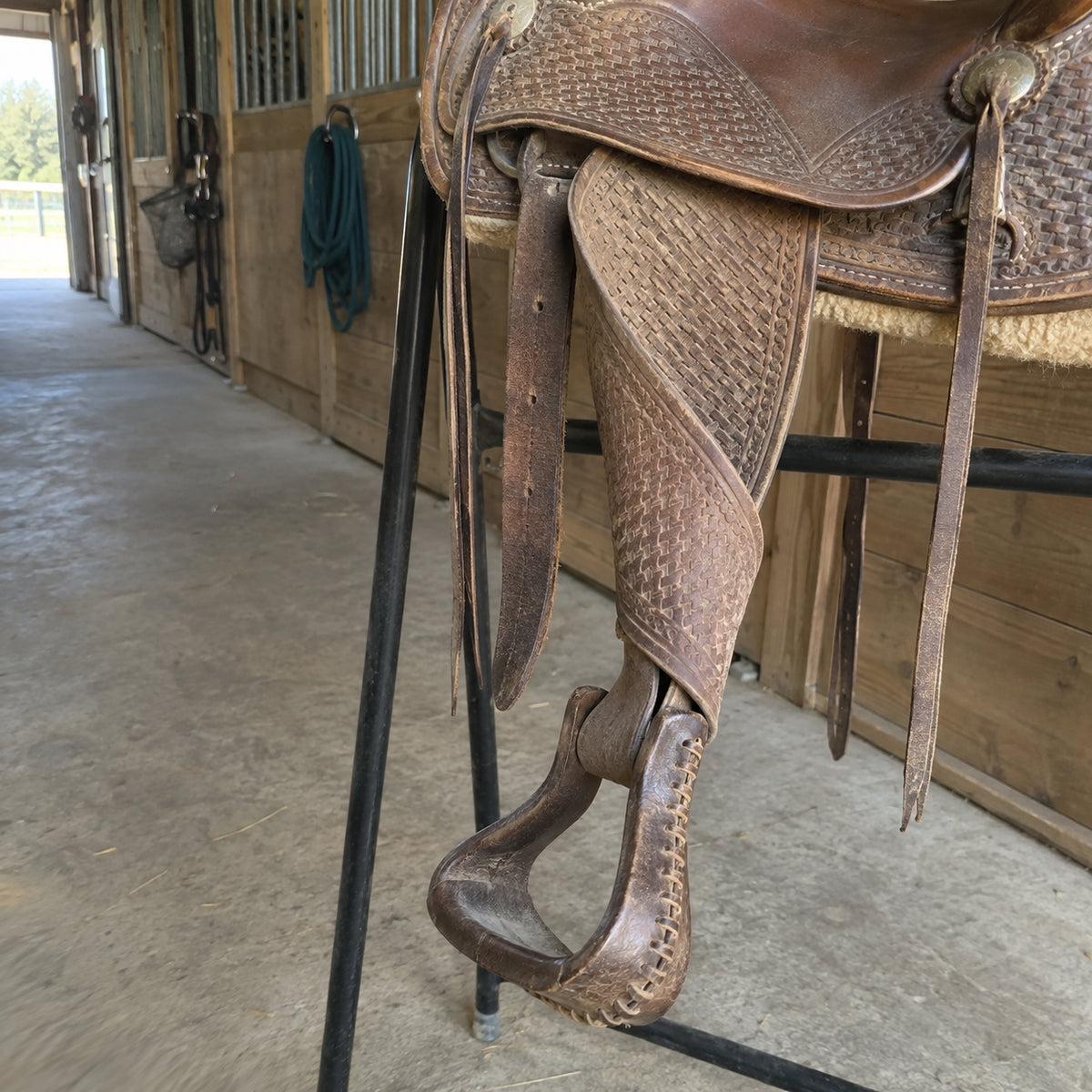
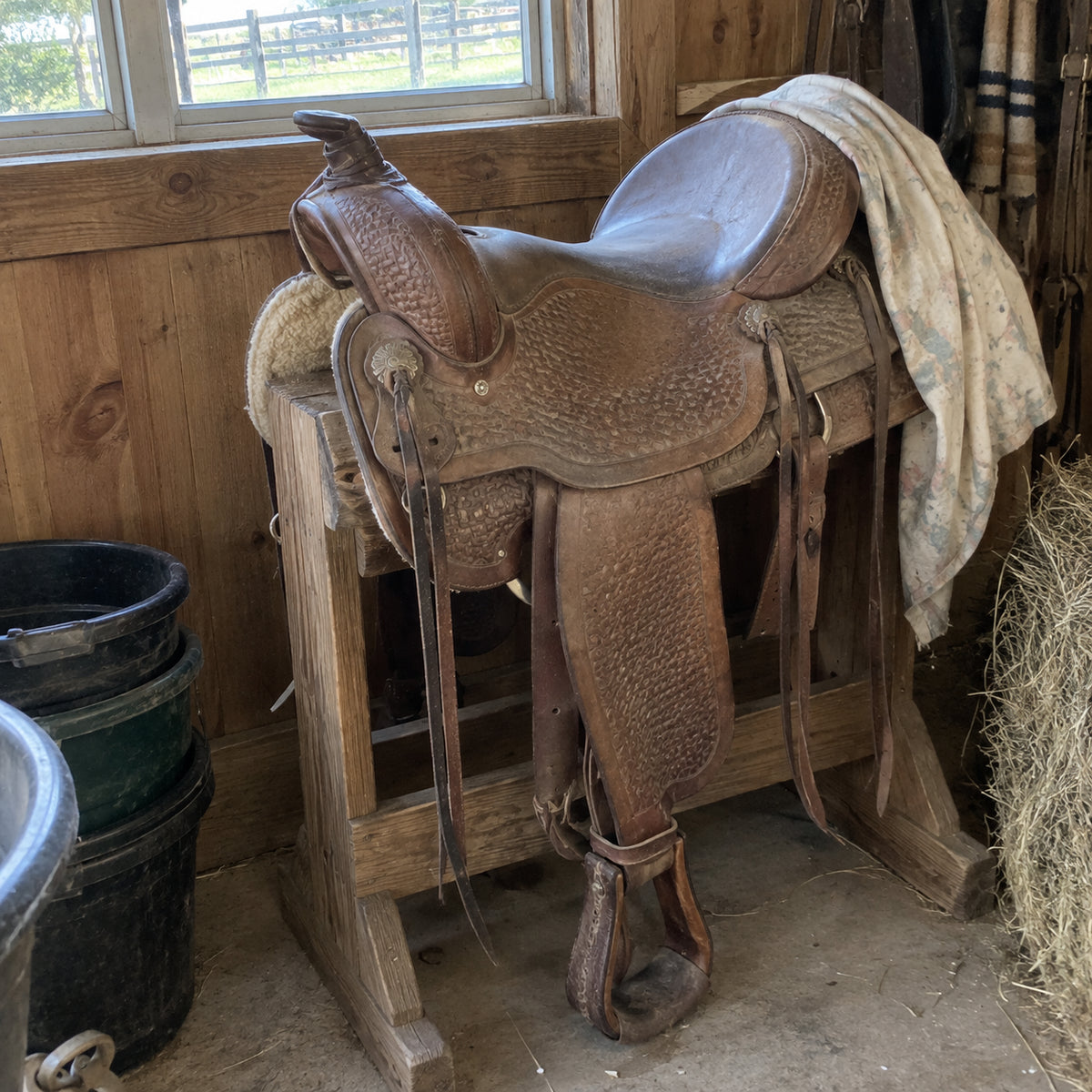
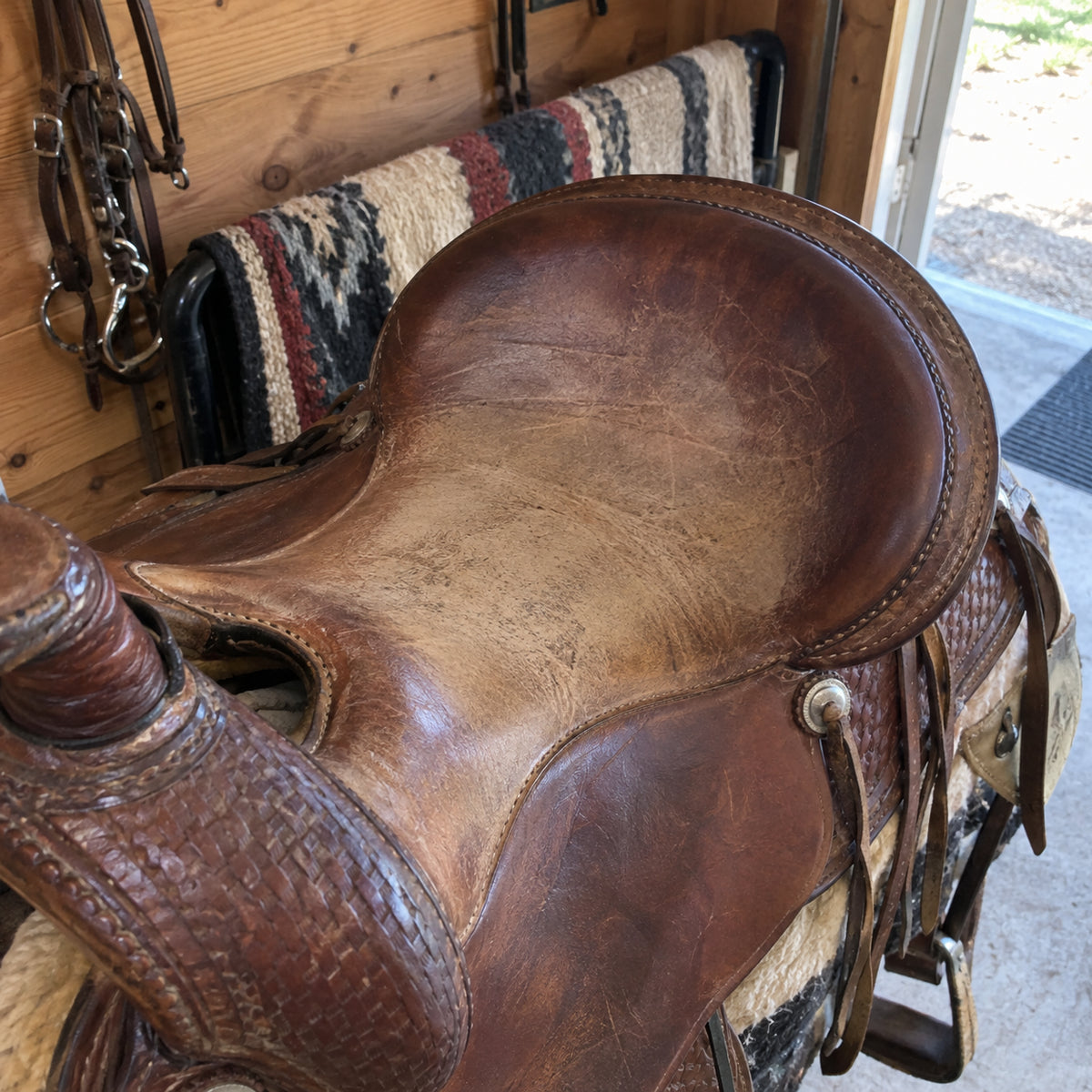
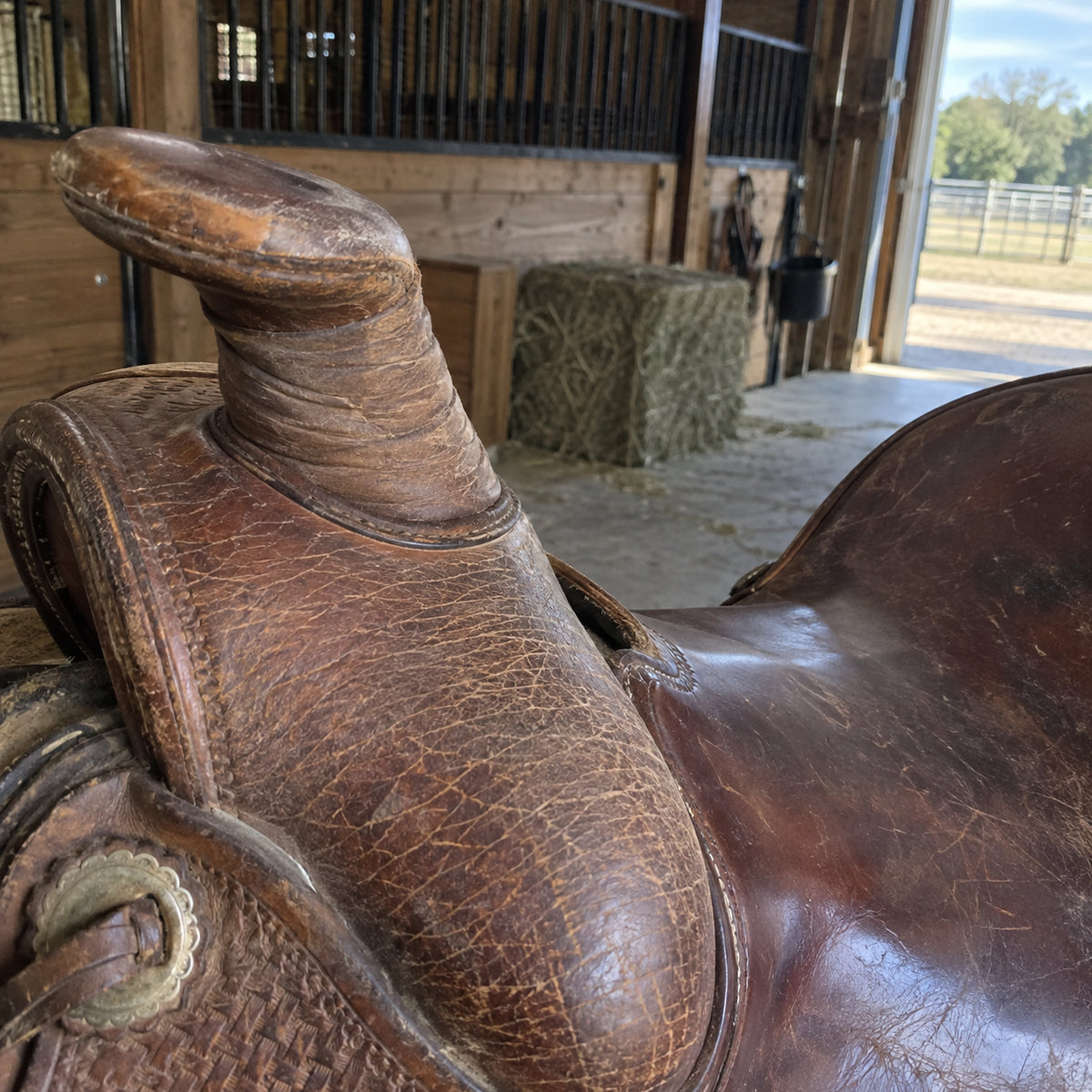
★★★★★ 4.8/5 Excellent | Based on 10.500+ reviews

Tanner's Oath Wood & Leather Salve

  • Join over 122,000 people who say it works
  • Brings dry, dusty saddle leather back to a rich, even color without soaking it in oil
  • Softens stiff fenders and skirts so they bend again and the saddle stops squeaking under you
  • Goes on thin and buffs dry, so nothing sticky on your jeans, the seat or the reins
  • No petroleum, no dye. Six natural ingredients you can use around your horse
BLACK FRIDAY SALEBUY 1 GET 1 + FREE SHIPPING
00:00:00
HRSMINSEC
Low Stock - Selling Fast

American Express Apple Pay Google Pay KlarnaMaestroMastercard Shop Pay Union PayVisa
WARNING: Low Stock Notice

We make every batch by hand, and it has sold out before. Grab the Black Friday price while we still have jars. PS: It's only sold here, not on Amazon or eBay.

Olivia Carter | TXVerified buyer

It still looks old, which I'm glad about. It just looks cared for again.

This was my mom's saddle, and it had been sitting in her barn for almost 30 years. I honestly thought the leather was too far gone. After the first coat, I could already see some of the color coming back. I gave it a couple more over the next few days and the leather softened up a lot. That saddle means a lot to me.

What's in the jar
Hemp seed oil, jojoba oil, shea butter, beeswax, carnauba wax, vitamin E. Nothing else. No silicone, no petroleum distillates, no fragrance, no dye. That's why there's no color chart to match and no warning label to read.
How does it actually work?
A white ring is water trapped inside the clear finish, scattering light. The wood under it is fine. Small-molecule plant oils get under the finish and push the water out; shea butter feeds the dried-out grain; the waxes set a thin breathable seal on top. Wipe on with the brush, wait three minutes, buff off with a cloth. Details further down.
Shipping and returns
We're a small family business, and we've only just started. Every order is packed by our own hands, so please allow 1 to 2 days for packing, plus 7 to 13 days for delivery. We ship orders together in batches, which is why it sometimes takes a little longer, and we're truly sorry for the wait. Our goal is simple: to help you bring your memories back to life.
As featured in
Western HorsemanHorse & RiderBarrel Horse NewsAmerica’s HorseCowgirlRanch & ReataQuarter Horse NewsThe HorseTrail Rider Western HorsemanHorse & RiderBarrel Horse NewsAmerica’s HorseCowgirlRanch & ReataQuarter Horse NewsThe HorseTrail Rider

Why the stiff fenders, the squeak and the grey, dusty skirts on your saddle are actually the same problem

If more than one of these is true about your saddle, the leather is trying to tell you something:

White water ring on a wood table

The fenders are so stiff you have to fight them to turn the stirrup.

Grey, dried-out wood on an old sideboard

Dad's saddle sat on the rack for years, the skirts went grey and thirsty, and you're scared to make it worse.

Sun-faded cherry dresser top

The seat has faded pale right where you sit, lighter than the rest.

Cracked leather sofa arm under a throw

The horn wrap and the swells are dry and creasing, and someone already said the words "just buy a new saddle."

Dry, creased leather on a recliner seat

It squeaks with every step down the trail, and nobody makes a saddle like Dad's anymore.

Here's what nobody's telling you

These aren't five separate problems. They're one problem showing up in five places: the leather has dried out, and everything you've soaked, sprayed or wiped on it has sat on top instead of feeding it.

The connection you've been missing

Your saddleThe real cause
Fenders too stiff to turnThe fibers dried out and bind instead of flex. The leather itself is sound.
Grey, dusty, thirsty skirtsThe leather's own oils dried up on the rack, and nothing has fed it since.
Seat faded lighter than the restSun, sweat and the friction of riding dried that spot out faster than the rest.
Fine lines on the horn and swellsLeather is skin. Where hands, sun and rain hit it most, it dries out and creases.
The squeak with every stepDry leather rubbing on dry leather. The oil poured on heavy just made it dark and tacky.

Your saddle isn't ruined. It's dried out and fed the wrong way.

Saddle leather is hide, and it works like your own skin. It holds its own oils deep in the fibers, and it has a finished surface on top, the grain side you see and sit on. That surface is what you're actually looking at.

When the oils underneath are still there, you don't think about your saddle at all:

  • Rain beads up and wipes off
  • The fenders swing and the stirrups turn easy
  • The seat feels soft and quiet, and nothing comes off on your jeans
But over the years those oils dry out, and most of what we put on makes it worse: neatsfoot poured on heavy, sticky conditioners, glycerin left to sit, kitchen oils.
  • Heavy oil soaks in unevenly and darkens the leather for good
  • What doesn't soak in stays tacky and collects barn dust
  • The fibers underneath keep drying, so fenders stiffen and it squeaks
  • Kitchen oils go rancid and can draw mice and mold

Nothing gets fed, everything gets soaked or coated. The heavy oils and thick conditioners sold for saddles are a big part of why yours looks worse every season.

What happens to saddle leather under years of the wrong care

Oils still in Fenders soft, seat quiet Dried out, soaked wrong Grey skirts, stiff fenders Years of sun, sweat and heavy oil → Saddle leather health

Under the surface: the soaked spot and the stiff fender

The soaked spot Oil on top, holding dust The stiff fender Oils gone, the fibers bind Underneath: still dry Leather underneath: dry, not dead The dark, tacky patch The fender that binds

And it builds. Season after season.

That dark, tacky patch where somebody poured the neatsfoot? It isn't the leather healing. It's oil sitting where the hide couldn't take any more, holding every bit of dust and sweat.

The stiff fenders are the same story. The leather isn't worn out. It's just gone years without the oils it started with, and the heavy coats never fed it evenly.

The neatsfoot soak, the olive oil, the glycerin bar, the spray conditioner? Right idea, wrong tool.
  • That's why the seat was tacky again by the next ride
  • That's why the fenders went stiff again a month after the oil
  • That's why the color keeps getting darker and patchier
  • That's why the squeak never really went away

Your saddle is sitting under sticky oil, and the leather underneath is running on empty.

The longer it goes, the more permanent it feels. More dust. More stiffness. More squeak. Another season with Dad's saddle on the rack and you riding the old nylon one.

Why nothing has worked

Mayonnaise, an iron over a towel and a bottle of olive oil, crossed out

You tried the kitchen fixes: olive oil, coconut oil, whatever was in the pantry.

Why it failedKitchen oils soak into dry leather and look great for a day, but there's no wax to hold them, so the leather dries right back out. Olive oil can go rancid in the leather, darken it in patches and draw mice and mold in a damp barn.
Spray polish, a scratch-cover polish and a pack of leather wipes, crossed out

You poured on neatsfoot oil because everybody said to.

Why it failedIt softens, but it goes on heavy and soaks in unevenly, so the saddle comes out darker in patches and never lightens back. What the leather can't take stays tacky, collects dust and comes off on your jeans. And the compound in most bottles is cut with petroleum.
A solvent wood restorer with steel wool next to a big-name leather conditioner, crossed out

You bought the glycerin soap and a big-name tack conditioner.

Why it failedThe soap cleans but puts nothing back, and the glycerin it leaves can hold damp in the leather. The conditioner is thin and gone by the next ride, or thick as syrup and sticky in the seat. Two bottles in the tack trunk, and neither one does both.

The missing piece

One salve that does all three jobs at once: works into the dry fibers instead of flooding them, feeds the leather that's gone stiff and grey, and buffs to a thin, breathable natural wax instead of a sticky film.

Try Tanner's Oath risk-free
30-day money-back guarantee

The six-ingredient salve that feeds saddle leather the old way, without the petroleum

Long before the tack store shelf filled up with petroleum blends, leather was kept with oil, a rag and a wax. Tanner's Oath is that idea in one jar, built for three jobs: work in, feed, seal.

1
Work in

Small-molecule plant oils work into the dry fibers in a thin coat instead of flooding them, so the leather takes what it needs and nothing pools on top.

2
Feed

Shea butter and the oils put back what years of sun, sweat and the rack pulled out, so stiff fenders flex again and grey skirts get their color back.

3
Seal

Beeswax and carnauba buff to a thin, breathable finish. Rain beads off, dust wipes off, and nothing sticky is left on the seat or your jeans.

Works into dry fibers
Cold-pressed hemp seed oil

Light enough to work into dry leather fibers instead of sitting on top.

Reaches the grain
Jojoba oil

Closest plant oil to the natural oils in leather. Absorbs evenly into dry leather.

Feeds stiff leather
Shea butter

Replenishes dried-out leather so fenders and skirts flex and look warm again.

Seals without silicone
Beeswax

A thin, breathable protective layer. Water beads off. Nothing gets locked in.

Buffs dry
Carnauba wax

The hardest natural wax. Leaves a low, honest sheen that doesn't go sticky in the seat.

Keeps it fresh
Vitamin E

Natural preservative. It's why there's no fragrance or synthetic stabilizer in the jar.

Together, one jar does the job of four products

Leather oil, conditioner, saddle balm and protective wax, in one jar:

  • Grey, dusty skirts get their color back
  • Stiff fenders soften and swing again
  • The squeak with every step goes quiet
  • Dry seats feel soft again, not slick
  • Rain beads up instead of soaking in
  • No petroleum, no sticky buildup

This isn't covering the problem. This is feeding what's underneath.

★★★★★ 4.8 out of 5 | 10,500+ reviews

Real saddles, real riders: 122,000+ people who kept what they had instead of replacing it

Every review comes from a paying customer. None are paid for, none are incentivized.

★★★★★
4.8 out of 5Based on 10,500+ reviews
5★
9,240
4★
945
3★
210
2★
63
1★
42
Write a review
★★★★★09/07/2026
Lauren B. Verified buyer

the color looked exactly the same after it dried

I was really hesitant to put anything on this saddle because it's such a light color. Neatsfoot darkened my old one pretty badly, so I tested this underneath first where you wouldn't see it. The color looked exactly the same after it dried, so I went ahead and did the rest. That was honestly the biggest thing for me. I didn't want to ruin the color just trying to condition it.

★★★★★09/06/2026
Rachel M. Verified buyer

this one actually soaked in

I've bought so many different conditioners from the tack shop and they always seem to leave my saddle either greasy or kind of waxy afterward. This one actually soaked in. I wiped it down after and there wasn't that coating left on the leather. It just feels soft and normal again.

★★★★★09/05/2026
Mike J. (farrier, 30 years) Verified buyer

conditions the leather without making me second-guess

After 30 years around tack, I've seen plenty of conditioners leave stitching soft or questionable over time. That's always in the back of my mind when I put something on a saddle. I've used this on quite a few pieces now and haven't had that issue. It conditions the leather without making me second-guess what it's doing to the stitching.

★★★★★09/03/2026
David P. Verified buyer

it's been about four months now

I was conditioning my tack every couple of weeks because it always seemed to dry out again so fast. I used this once and then honestly forgot about it for a while. It's been about four months now and the leather still looks good and feels conditioned. I definitely wasn't expecting it to last that long.

★★★★☆09/01/2026
Brian T. Verified buyer

i'm still on the same jar

I tried it on my bridle first just to see how it would do. Then I ended up using it on the rest of my tack and even a couple leather pieces in the house. I'm still on the same jar. I finally got rid of a few other conditioners that had just been sitting around half-used.

123›
Free shipping from the USAOn all orders
Six natural ingredientsAll printed on the front
Safe around kids and petsNo fumes, no warning label
Try it for 30 daysMoney-back guarantee
Straight from the barn

What a barn owner of fifteen years wishes you knew before you pay to recondition Dad's saddle or buy a new one

"Most weeks a boarder brings me a saddle that was their mother's or their dad's. The skirts have gone grey, the fenders won't turn, and somebody's told them to soak it in neatsfoot or hang it on the wall. Nine times out of ten the leather underneath is fine. It's dried out. Soaking it is how you end up with a dark, sticky saddle nobody wants to sit in. What it needs is feeding, thin, a little at a time. A rag, a jar and an afternoon, and nobody had to lose the saddle their dad rode in. That's all this jar is."

Abby Thornton, boarding barn owner for fifteen years

Try Tanner's Oath risk-free
30-day money-back guarantee
Garrett Vance of Ironwood Heritage Restorations at his workbench
Before and after

Same saddle. Before and after.

Nothing stripped, nothing soaked, nothing re-dyed.

Before
After

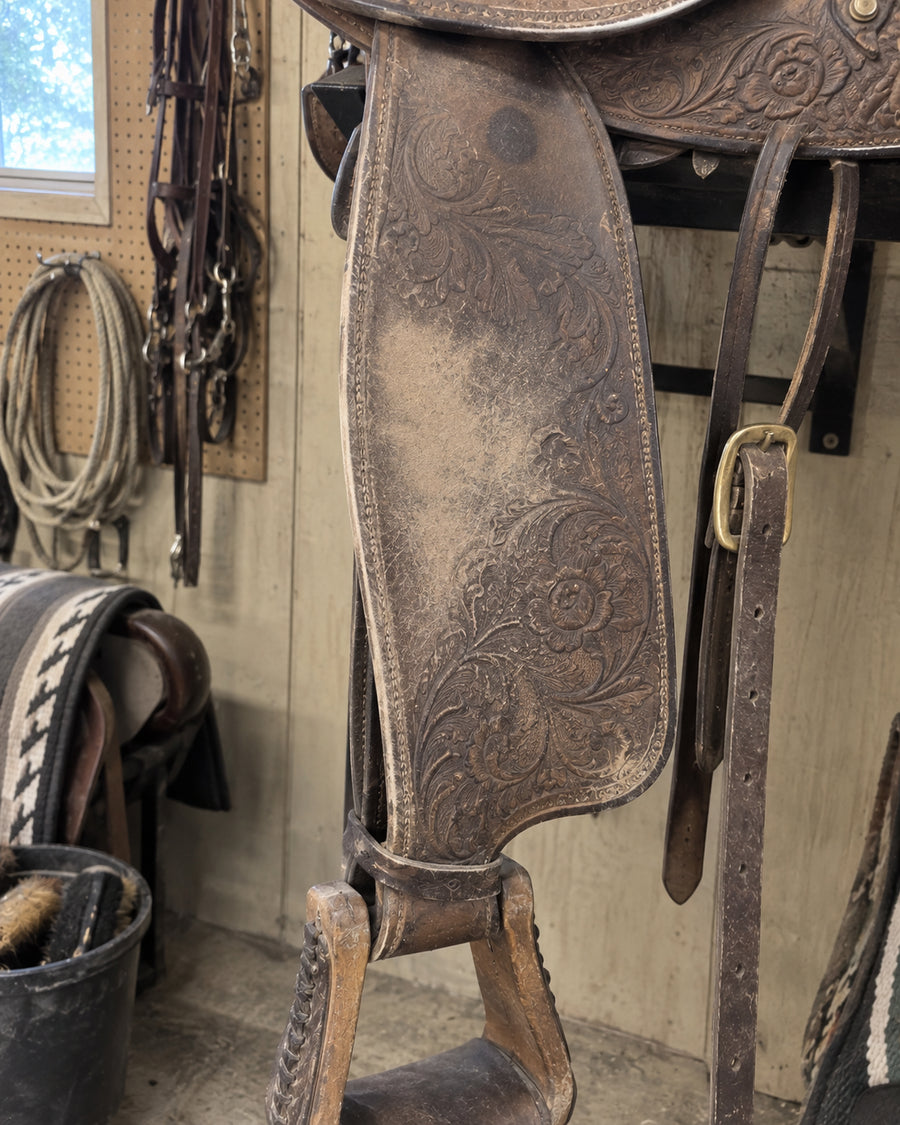
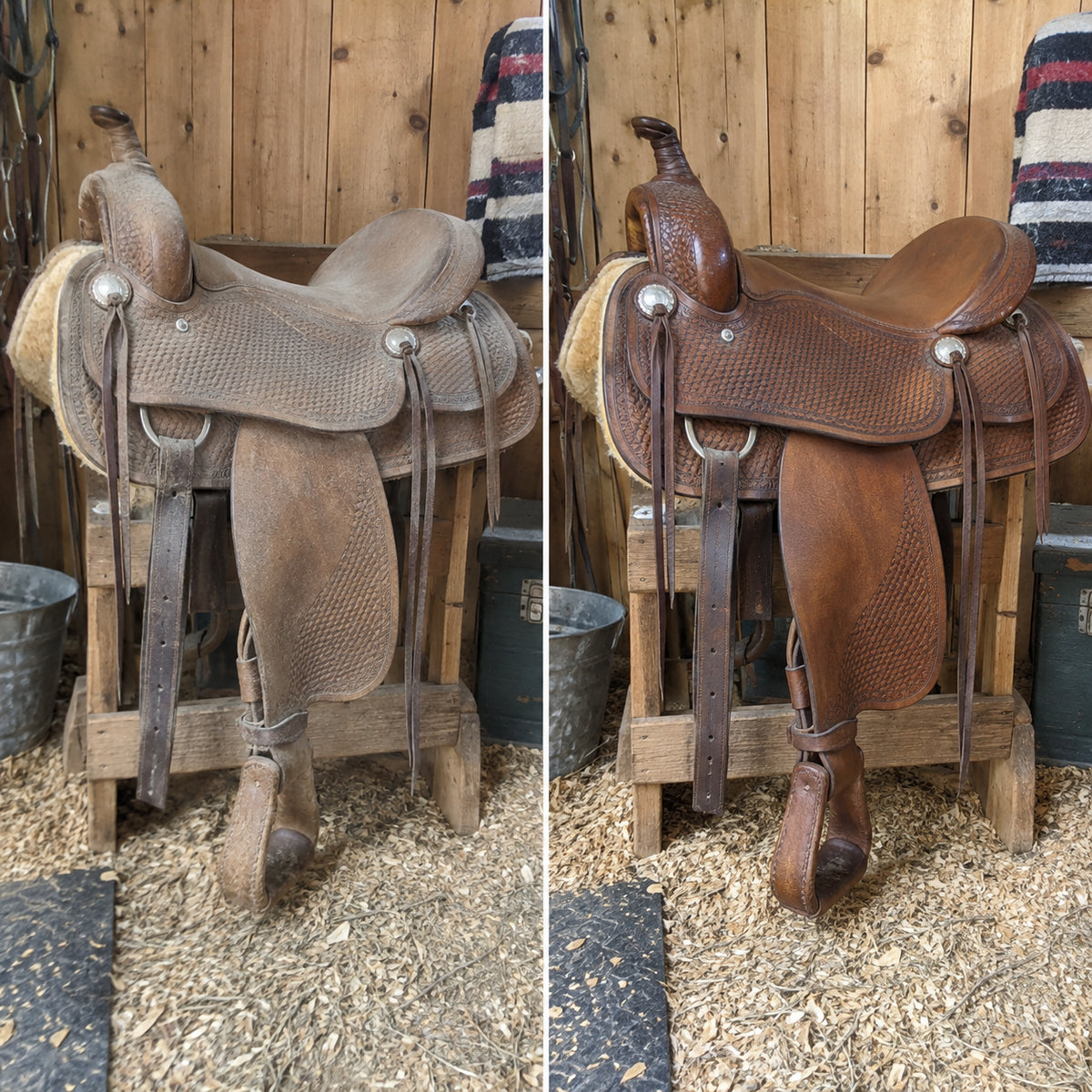
The left photo is why this saddle had been sitting in the tack room instead of getting used. The leather had gone dull and dry, especially across the seat and fenders, and there were pale areas you could see from across the barn. I’d clean it, put conditioner on it, think it looked a little better, and then a few days later it would look tired again.

I’ve had this saddle for years. There’s nothing wrong with it. The tree is sound, the rigging is good, and it still fits my horse better than anything else I’ve tried. But I honestly thought getting the leather looking decent again meant sending it out to be professionally reconditioned. I wasn’t looking forward to paying for that when the saddle itself was still perfectly usable.

Tried a little of this underneath first where nobody would see it, then worked across the saddle with an old cotton cloth. Used less than I thought I’d need and wiped off the extra afterward. Right photo is after I finished.

The pale, dried-out look isn’t showing in the right photo, but the old scuffs, creases, and wear are still there. I wanted the leather looking healthy again, not twenty years of riding erased.

The color is showing properly again, especially through the seat and fenders where it had looked the driest. It doesn’t have that greasy, over-oiled look either. Just looks like a well-kept saddle again.

It’s back on the saddle rack by the barn door now instead of shoved in the corner. I rode in it again this week. And yes, I’m probably going to be a little better about cleaning my tack from now on.

★★★★★ Susan M., Ohio✓ Verified Buyer
Before
After

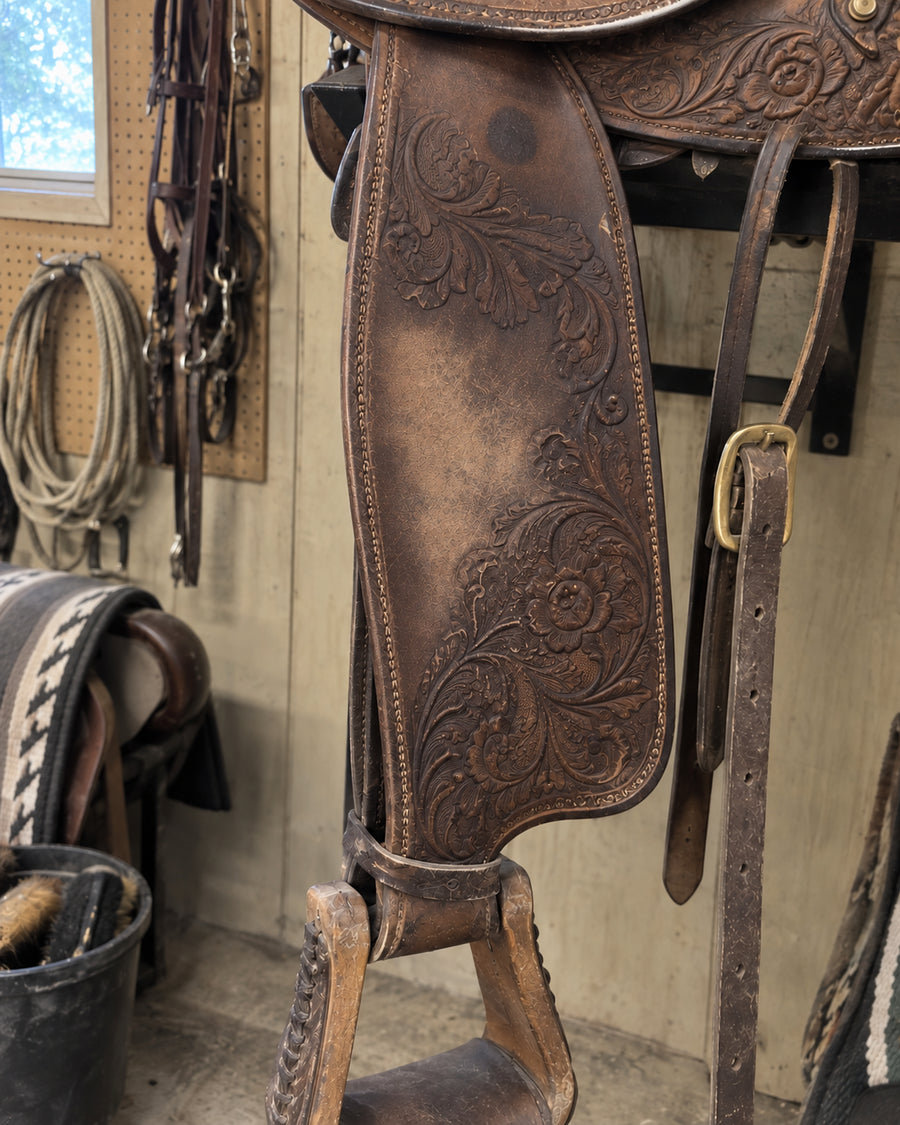
That’s the fender on the saddle I ride in all the time. It had gradually gone pale and rough, especially down through the lower part where my leg rubs every ride. I didn’t realize how dry it had gotten until I moved the stirrup leather and saw the difference between the leather underneath and the part that had been exposed.

I’d tried saddle soap and conditioner. They cleaned it, but that dry-looking patch was still there afterward. I started telling myself I’d deal with it properly before the next season, which somehow kept turning into “later.”

The saddle itself is still solid. Tree is good, stitching is good, and it still fits my horse exactly how I want it to. Replacing or sending the whole saddle out because one fender looked worn seemed ridiculous, but I didn’t know what else to do.

Worked a small amount of the salve over the fender after testing it underneath first. Went carefully around the tooling, stitching, and edges, then wiped it down with a clean cloth.

The creases and old wear are still there. They’re just not pale and dried-out looking anymore, and the leather feels a lot better when you bend it. You can see in the right photo that it’s still the same used saddle. The tooling hasn’t disappeared and the leather hasn’t suddenly gone shiny.

My husband walked through the tack room later and noticed it before I said anything. Asked whether I’d done the other fender too.

I hadn’t. Apparently that’s next.

★★★★★ Karen T., Texas✓ Verified Buyer
Before
After

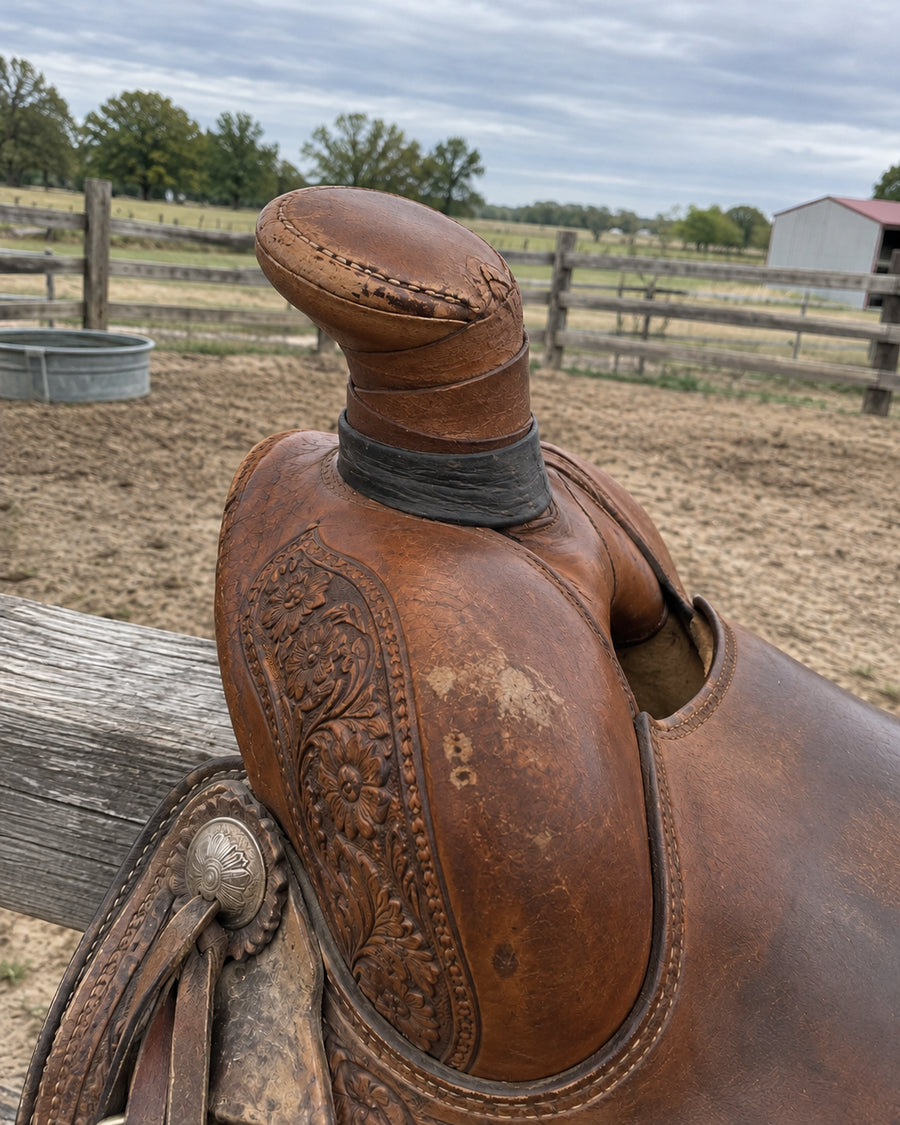
That’s my mom’s old saddle. The little brass name plate was hers too, and it’s pretty much stayed on there since the saddle came to me.

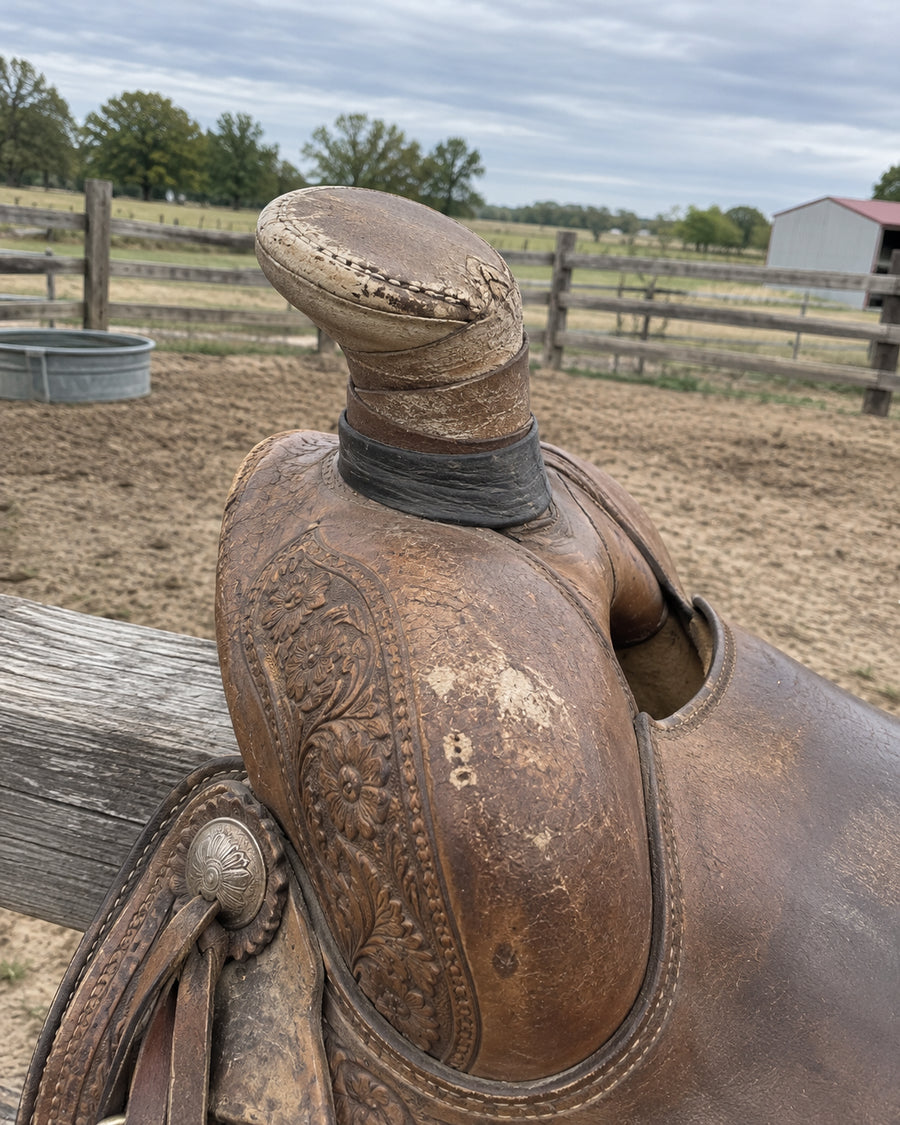
The seat and skirts still looked decent, but the pommel had gone so dull and pale that it almost looked dusty right after I’d wiped it down. Around the horn and the front edge was the worst. I kept telling myself I’d condition it properly, but it turned into one of those jobs I was always going to get around to later.

I thought about sending it out to be reconditioned. Even asked around. But between the cost, hauling it in, and not knowing how much they’d change the look of it, I kept putting it off. That was probably two years ago.

Ordered this thinking I’d at least try it before doing all that. Gave the leather a clean and let it dry, then worked a little salve in with a soft cloth. Did a small section first because I wanted to see what it was going to do before I touched the whole pommel.

What surprised me was how much of the original brown had been hiding under that dull, grey look. I hadn’t dyed it darker. I could just see the leather properly again.

The right photo is the same saddle, including the little worn spots and old marks around the horn. I didn’t try to buff those out or make it look like something brand new.

Put it back on the rack afterward and left it alone. My sister noticed it the next time she was at the barn. She asked if I’d had the saddle professionally done.

★★★★★ Linda R., Pennsylvania✓ Verified Buyer
Before
After

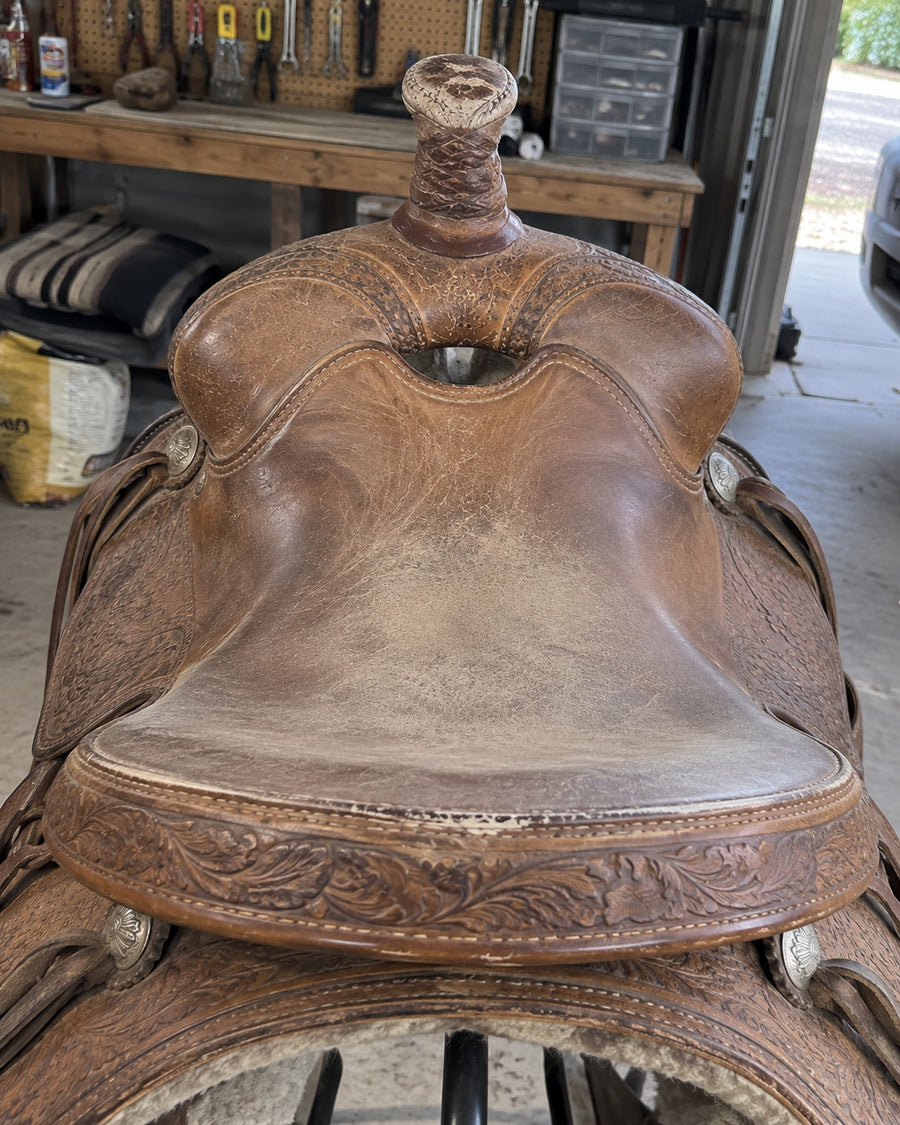
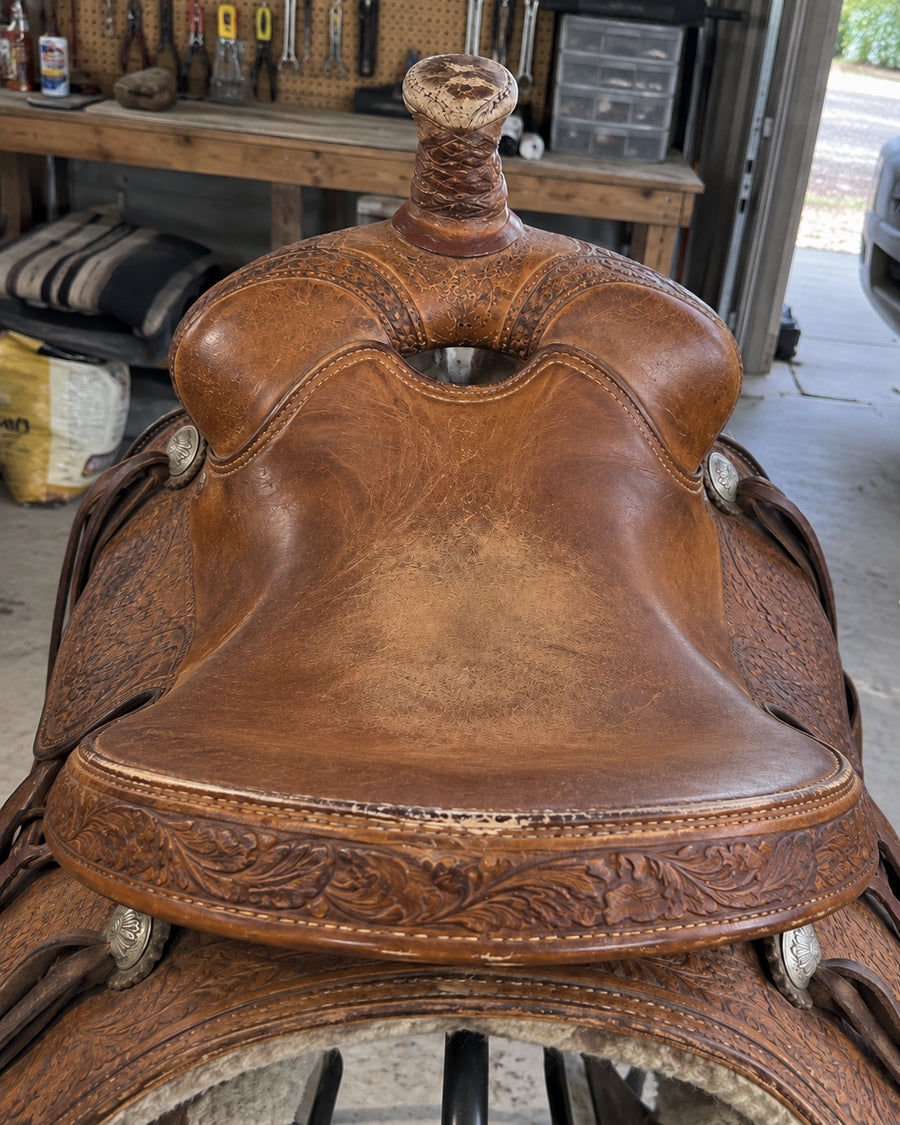
Wasn’t getting rid of this saddle. Everything on it is sound, it fits me and my horse, and I can ride in it all day without thinking twice. The seat just looked terrible.

You can see it in the left picture. All those light-colored lines and dry-looking creases across the seat made it look much worse than the skirts and tooling. I’d wipe it down when I cleaned my tack, but clean wasn’t really the problem. It felt dry, and every crease showed.

My wife had ordered Tanner’s Oath for another piece of leather in the house. I used some on the saddle before she’d even finished with it.

Did a small hidden patch first, then used a cloth to work a little over the seat. Wiped it thoroughly afterward because the last thing I wanted was anything greasy or slick where I actually sit.

It didn’t fill in the creases, and I wasn’t expecting it to. They’re still there, but they blend into the brown leather now instead of standing out as pale lines. The seat feels better too. Not slick. Just less dry.

Right picture is after. Same saddle, same wear in the seat from all the years I’ve ridden in it. Looks looked-after instead of like something that had been forgotten in the tack room.

We’ve agreed the saddle stays. I’ve been told to get my own jar.

★★★★★ Maria B., Michigan✓ Verified Buyer

Frequently asked questions

Will it darken my saddle?
Any conditioner can deepen dry leather a little as it takes the oil back, and very light or unoiled leather shows it most. Tanner's Oath has no dye and goes on thin, so it doesn't soak in heavy like neatsfoot. Test it under a fender first and check it the next morning.
Will it leave my seat sticky or slick?
Not if you use it thin and buff it. The oils work in, the waxes buff to a dry finish, and you wipe off whatever's left. Nothing should come off on your jeans or make the seat slippery. If it feels tacky, you used too much, so buff it again.
Is it bad for the stitching?
There's no petroleum in it. Just plant oils, shea butter, beeswax, carnauba wax and vitamin E. Riders have argued for years about whether petroleum blends are hard on stitching, and this skips that argument entirely.
Can it fix cracked leather or dry rot?
No, and be wary of anything that says it can. Surface cracks won't close and dry rot can't be reversed. Flex the stirrup leathers, billets and rigging first: if the leather flakes, tears or crumbles, it needs a saddler, not a jar. Dry but sound leather is exactly what this is for.
Does it kill mold?
No. A salve isn't a mold killer, and anything oily put on over mold can feed it. Clean the mold off first, let the saddle dry completely, then condition it with a thin coat rather than a heavy oil.
How do I use it on a saddle?
Clean the saddle first with a damp cloth or saddle soap and let it dry. Wipe on a thin coat with the brush or a cloth, work it into the seat, fenders and skirts, give it ten minutes, then buff off what's left. Do the underside of the fenders too.
Can I use it on suede or roughout?
No. Suede, roughout and the fleece underneath don't take a salve well, so keep it to smooth, finished leather: the seat, fenders, skirts, jockeys, horn wrap, headstalls and reins.
Does it work on Western and English saddles?
Both. Thick Western skirting leather and the finer calfskin on English saddles are both hide that dries out the same way. Use less on fine English leather and test a hidden spot, since thin leather shows any color change faster.
How often do I need to use it?
Most riders do a full coat at fall put-away and again when they pull the saddle out in spring, plus a light touch-up when the leather looks thirsty. A saddle ridden hard in sun and sweat may want it more often.
Is it safe around my horse?
It's six natural ingredients with no petroleum, no silicone, no solvents and no fragrance, so there are no fumes in the barn and no warning label. Buff it dry so nothing sits on the leather that touches your horse.
Does it smell?
Almost not at all. There's no added fragrance, just a faint natural smell that's gone once you buff it.
How is this different from neatsfoot oil?
Neatsfoot is a heavy oil that soaks in deep and unevenly, so it can darken leather and leave it tacky, and most bottles are a compound cut with petroleum. Tanner's Oath is a salve: thin oils to feed, plus beeswax and carnauba that buff to a dry, breathable finish.
Will it work on the rest of my tack?
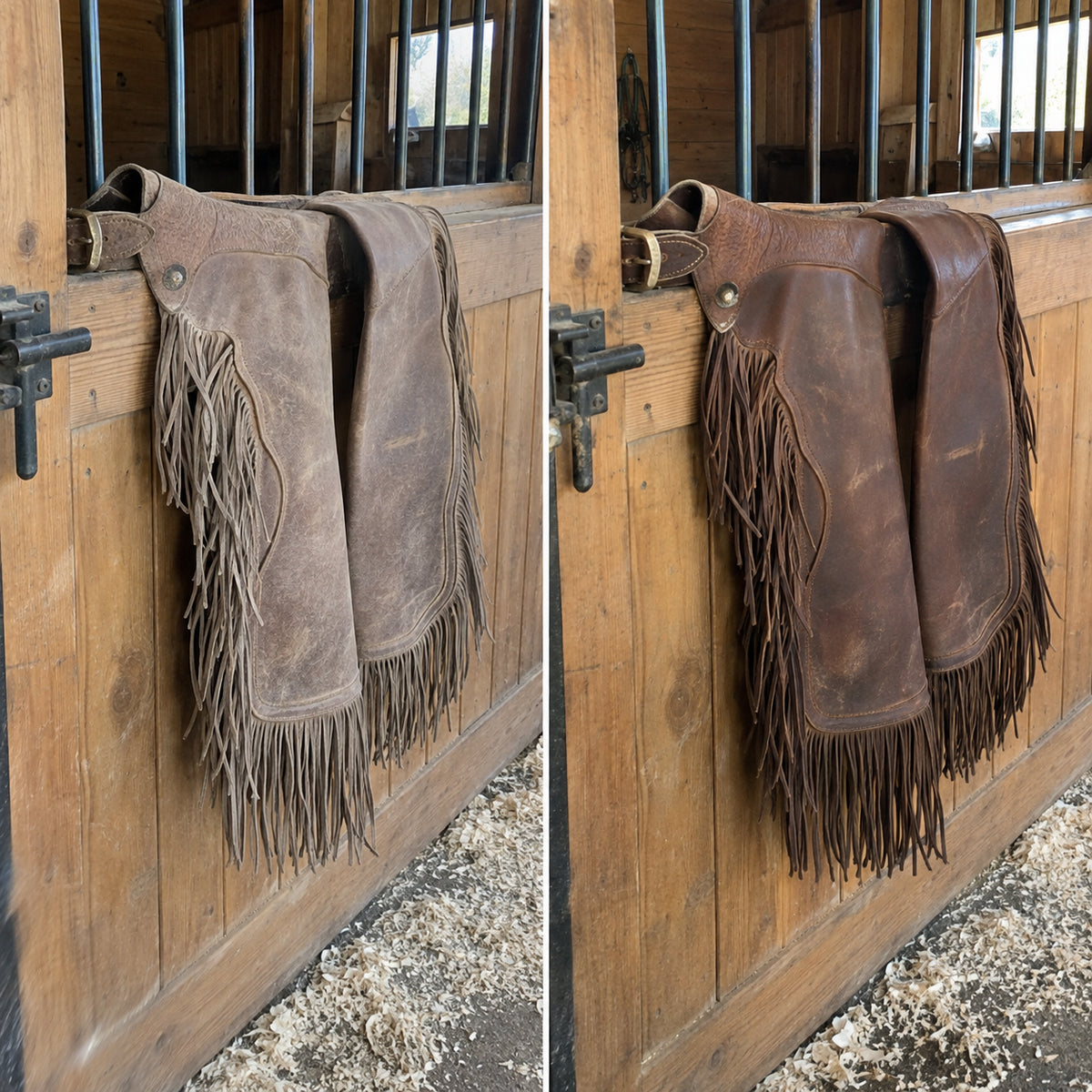
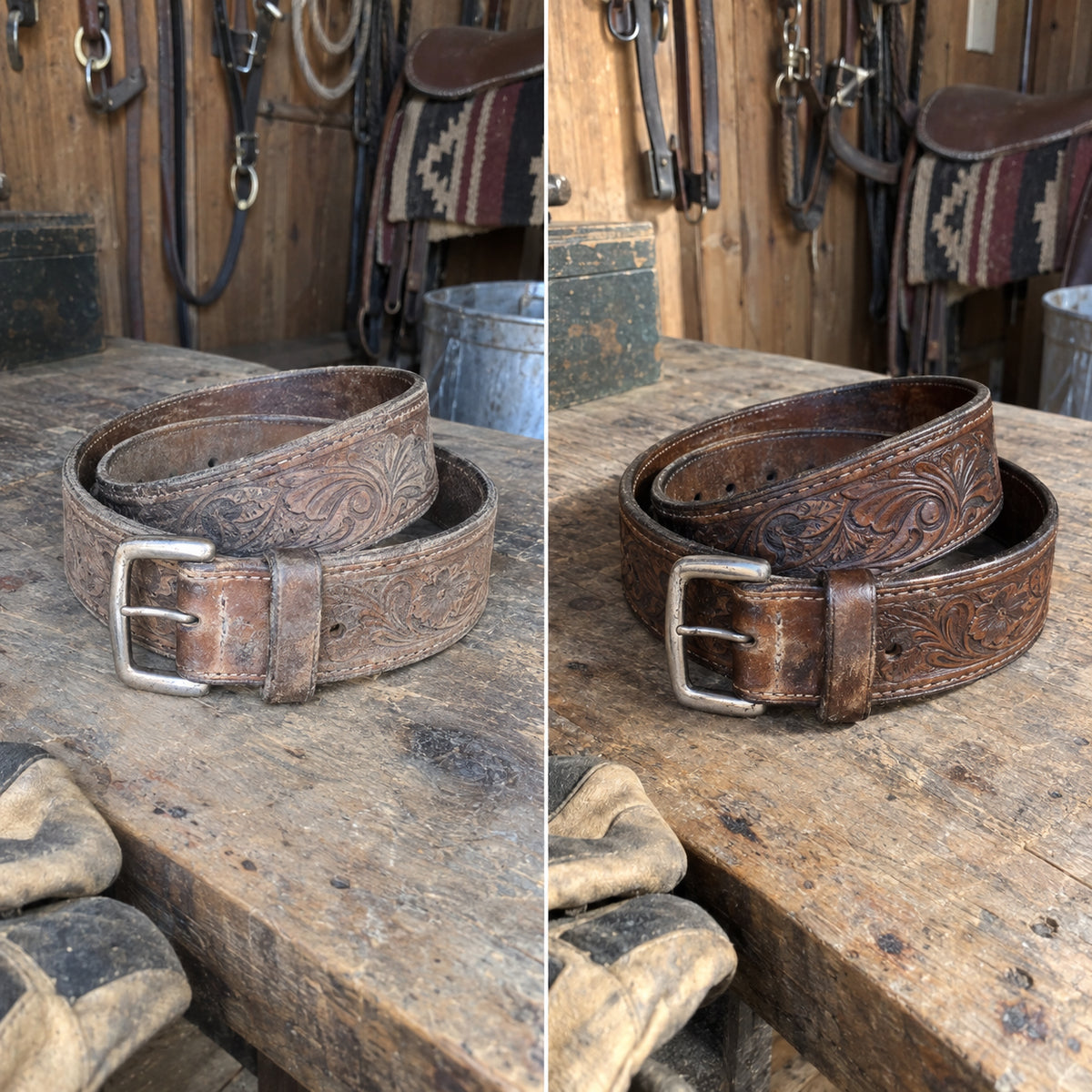
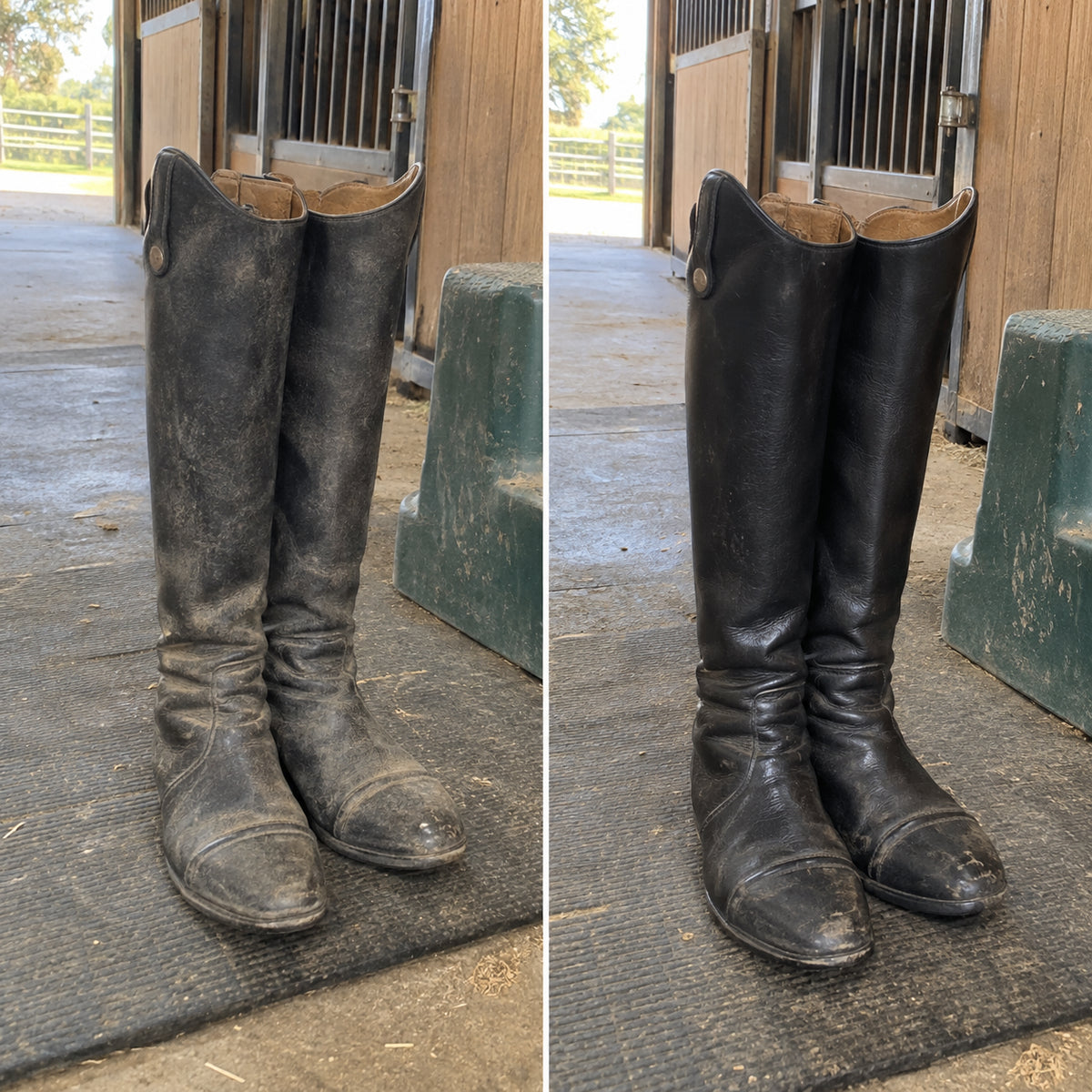
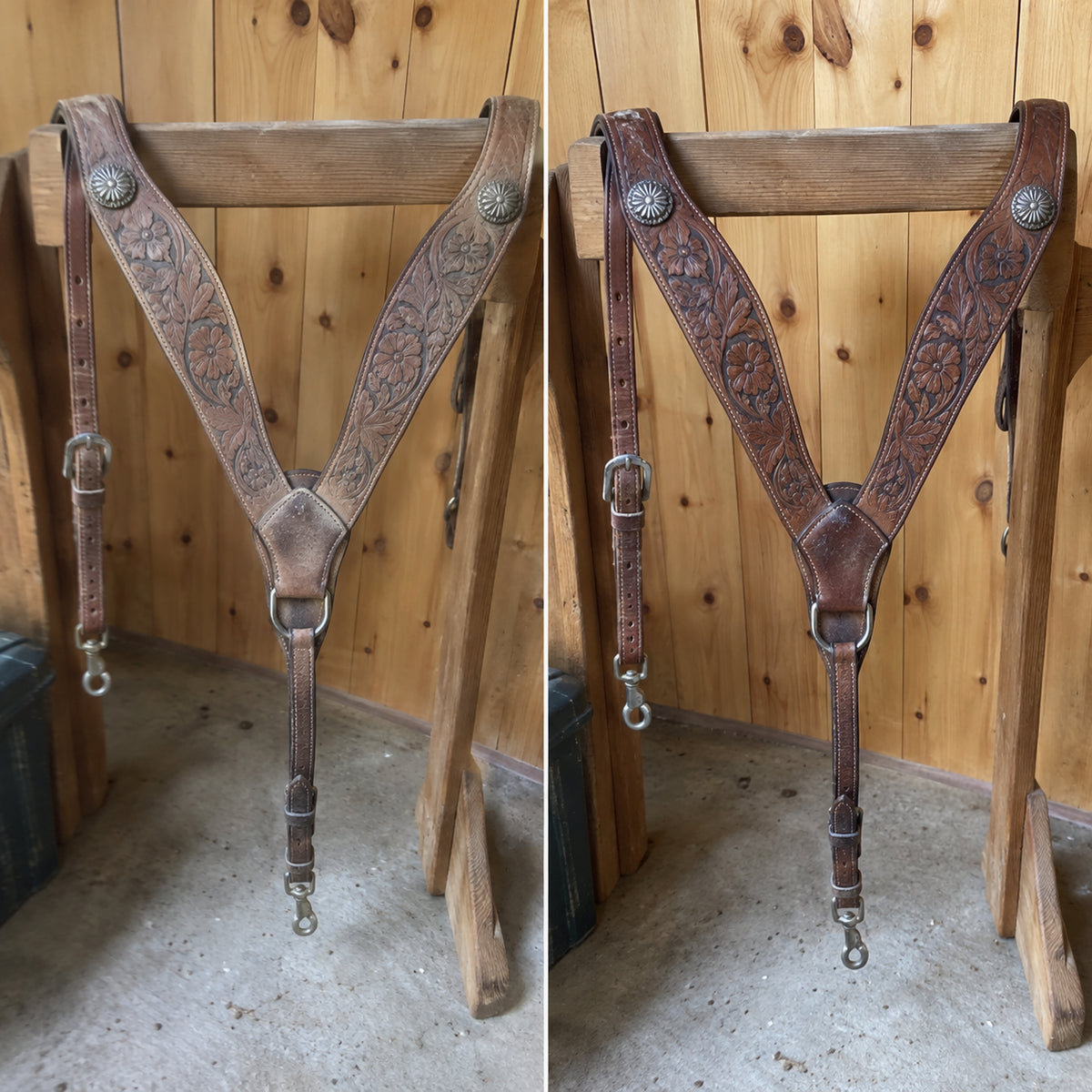
Yes. Headstalls, reins, breast collars, latigos, chaps and boots are the same leather and dry out the same way. It works on wood too, so the tack trunk and the saddle rack can have some.
Will it change the patina on an old saddle?
It doesn't strip, sand or dye anything, so the marks that make it Dad's saddle stay. It feeds the leather and buffs to a thin natural wax. Test on the underside of a fender first so you can see how your saddle takes it.
Try Tanner's Oath risk-free
30-day money-back guarantee

We're on a mission to save a million family saddles from the back of the barn, the wall hook and the consignment rack

Dad's saddle isn't ruined. The fenders don't need replacing, and the old saddle on the rack isn't done either. Most of what gets hung on the wall, sold off cheap or swapped for a new one is just dried out, and it needs feeding, not replacing. Here's where we're at:

122k+

jars in American homes

10.500+

verified reviews, 4.8 out of 5

$150

typical saddle shop price to recondition one dry saddle

6

ingredients, all on the front of the jar

Family setting a restored walnut dining table for a holiday meal, leather sofa and old dresser behind them
★★★★★ 4.8/5 Excellent | 10,500+ reviews

Stop soaking it. Start feeding it.

You deserve to take the cover off. To ride Dad's saddle again instead of the nylon one. To hand it down looking the way he kept it, instead of apologizing for the dark, sticky patches.

Not another heavy coat of oil. Not $175 at the saddle shop or a new saddle you never wanted. One afternoon, one jar, and the saddle you already love.

Try Tanner's Oath risk-free
30-day money-back guarantee
White water ring, before and after
Creased leather arm, before and after
Grey, dried-out sideboard top, before and after
Dry, creased leather recliner seat, before and after
Leather boots, before and after
Saddle, before and after

No junk in the tin. No junk in your inbox.

© 2026, Tanner's Oath.
American Express Apple Pay Google Pay Klarna Maestro Mastercard Shop Pay Union Pay Visa